AI Engineer and Automation Expert

I build AI systems that work outside a demo.

Five years of production backend engineering; aviation MRO systems, SAP integrations, regulated release cycles. Now working at the model and architecture level: retrieval-augmented systems, multi-agent orchestration, and the unglamorous data work that decides whether any of it holds up.

The projects below span medical imaging, marketing performance analysis, regulatory compliance and procurement data. Client organisations are described by sector rather than name. What is shown is the architecture, the failure modes, and the decisions; which is the part that transfers.

Python FastAPI Claude API RAG / pgvector / Pinecone Multi-agent orchestration n8n ElevenLabs Claude Code Cowork OpenAI Agent Builder Agents SDK MCP AI architecture Java / Spring / Quarkus
01  Lead project

OrthoAI

A solo-built diagnostic support platform for orthodontics; computer vision, clinical NLP and vector retrieval in one pipeline.

Dental and orthodontic diagnosis reads two things at once: the image and the record. OrthoAI treats them as one retrieval problem. Radiographs pass through a segmentation and detection stage; clinical text is embedded with a domain language model; both are resolved against a shared vector index so a query returns the imaging finding and the supporting clinical context together, rather than as two disconnected answers.

Built end to end alone and presented publicly at Red Bull Basement. It is the artifact that shows work at the model and architecture level rather than the orchestration level.

Vision
YOLOv8 detection, U-Net segmentation
Language
BioBERT clinical embeddings
Retrieval
Pinecone vector index
Serving
FastAPI
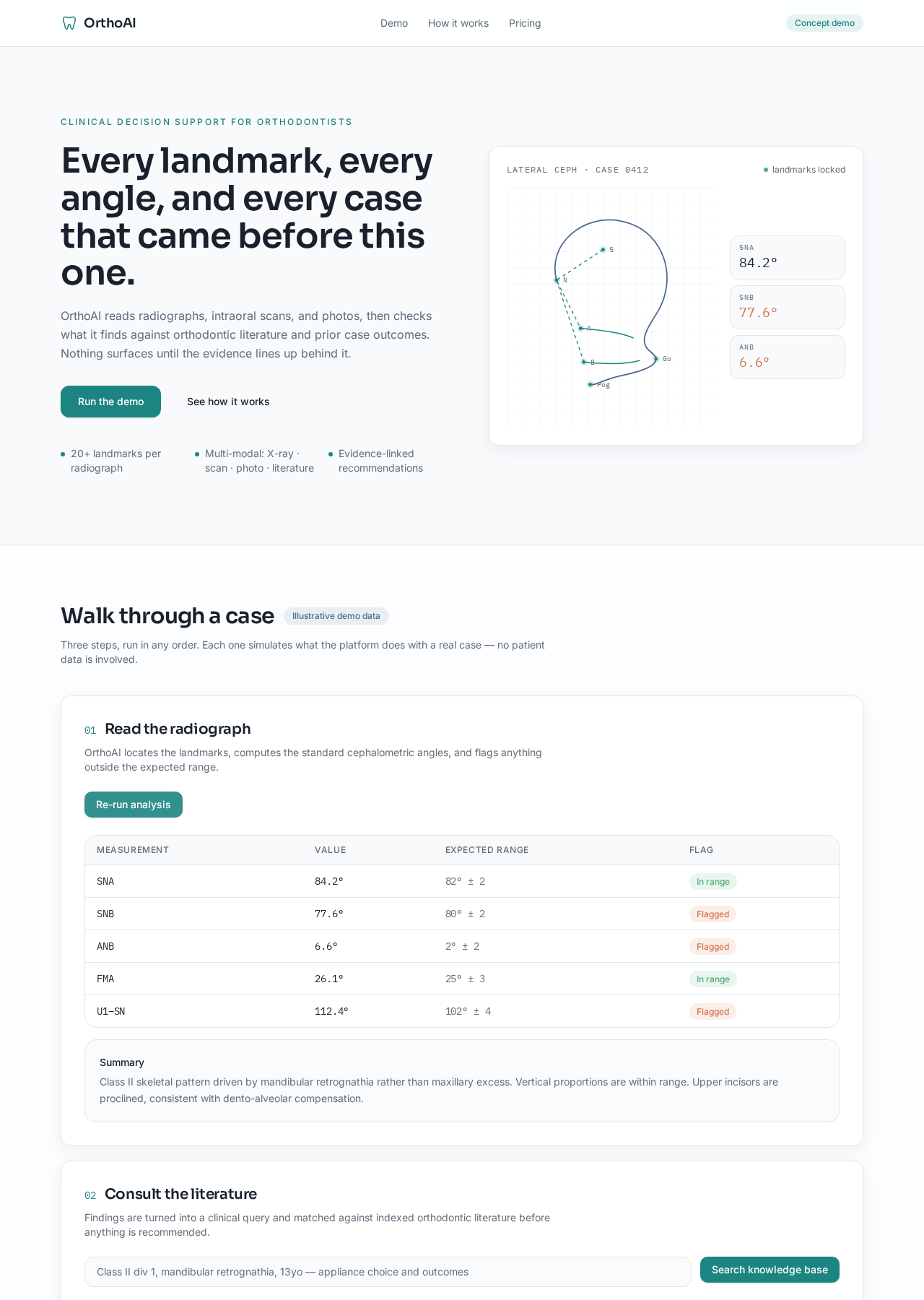
OrthoAI demo or presentation screenshot
Cephalometric landmarks and computed angles flagged against expected range, then matched to indexed literature before anything is recommended.
Pipeline
1Radiograph in → detection + segmentation
2Clinical notes in → domain embeddings
3Both indexed to a shared vector store
4Query → grounded diagnostic support response
02  AI systems
Digital marketing agency · in production

Multi-agent data analyst

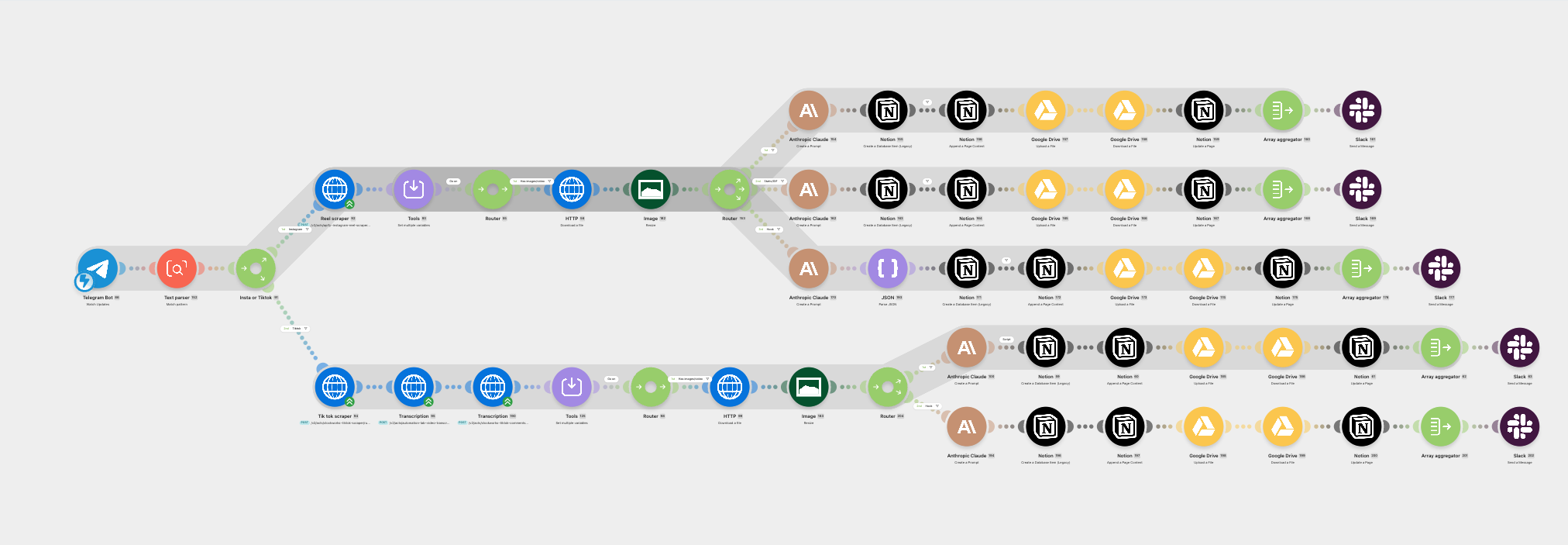
A production system that runs weekly creative performance analysis across paid ad accounts without a human opening a dashboard. Designed, built and shipped solo: agent orchestration, prompt design, schema, and the delivery layer the client actually reads.

The interesting constraint was that the data model did not match reality. Ad targeting metadata existed nowhere structured; it lived inside the ad name strings, under four different naming grammars across four accounts. I reverse-engineered each grammar into a parser, which became the ingestion layer: a daily job that writes one row per live ad with rolling week-over-week metrics and a computed diagnostic status. The system is read-only on the ad accounts by design. It reports; it never spends.

A failure worth keeping

A media-fetch step in one sub-pipeline reported complete success; webhook fired, HTTP 200; while writing a 21-byte file. Nothing threw. The pipeline carried on analysing an empty asset. Diagnosing it meant not trusting the transport-level signal and adding content assertions at each hand-off. Silent success is the failure mode distributed pipelines actually die of.

Stack
Make.com Claude API Notion Apify Ad-platform connector Slack
Five-skill modular stack
  1. Context & configuration
  2. Naming-convention parser
  3. Diagnostic logic
  4. Report generator
  5. Data schema & ledger definition
Jobs
Live; Monday weekly creative report, fixed ten-section format, written straight into the client workspace.
In progress; conversational query layer over the same data; an iteration queue surfacing creative fatigue automatically.
Sub-pipeline; short-form video ad URL to transcript to four-dimension hook analysis against a locked taxonomy, filed into a searchable creative library.
Orchestration canvas or ledger schema (redacted)
Scenario canvas or ledger schema; client data swapped for placeholders.
Compliance consultancy · architecture + prototype

Auditor support system

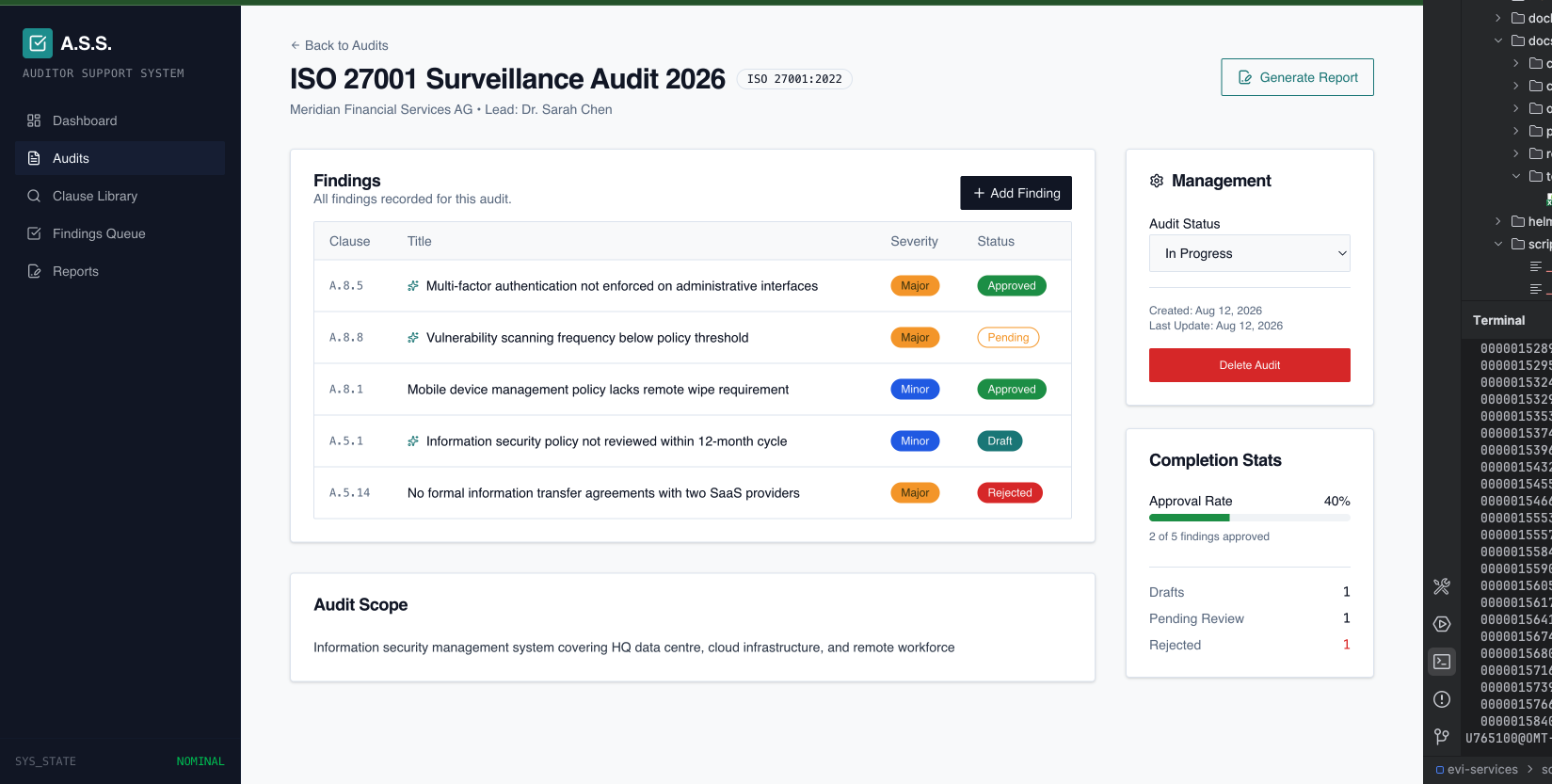
A six-layer architecture for AI-assisted ISO and compliance auditing, the first platform of a larger engagement and now running as a prototype. Retrieval runs over regulatory clause text in pgvector; findings are drafted by the model, mapped to the clause they answer to, and rendered to document by a generation service.

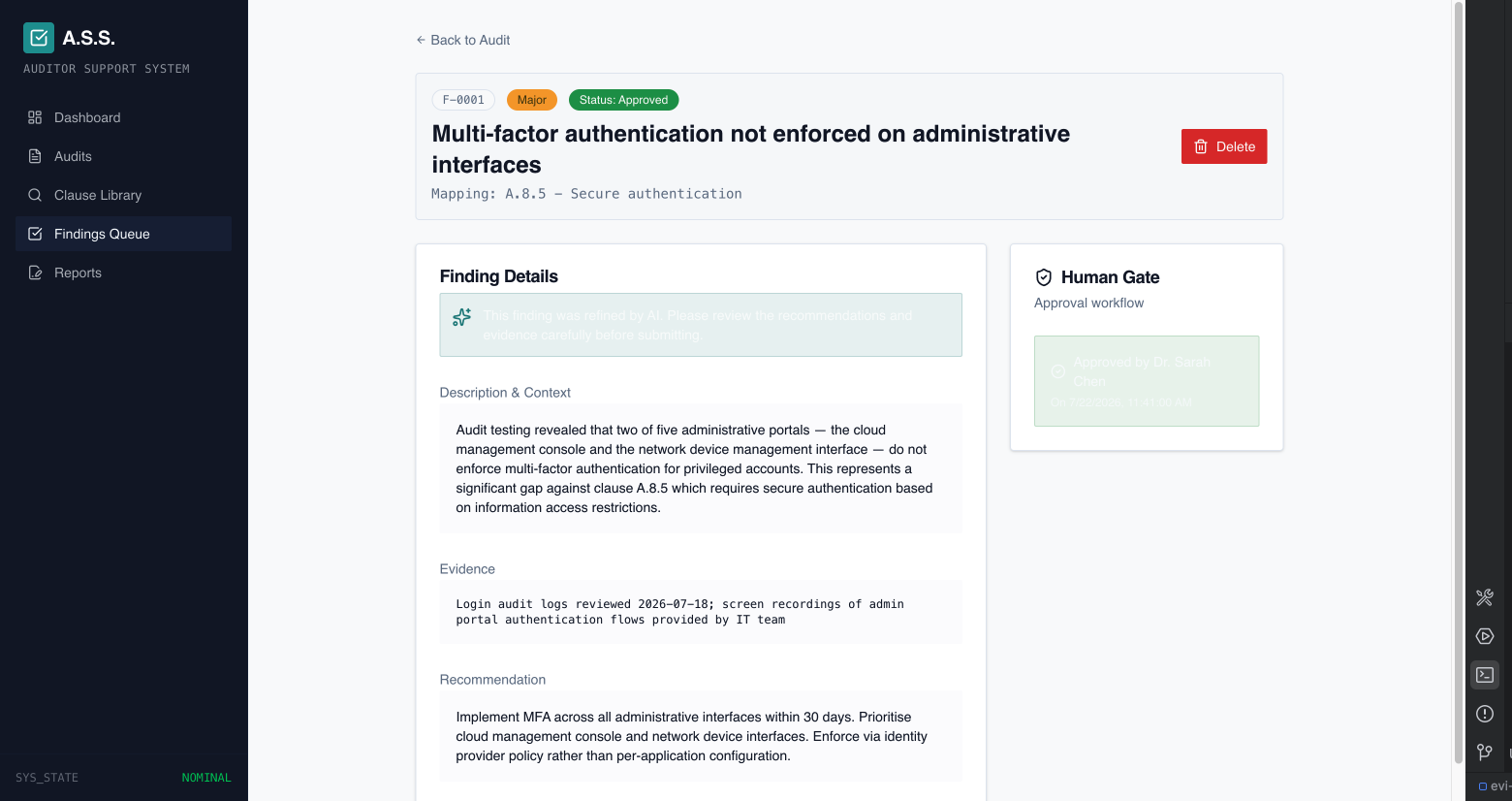
Two constraints were fixed before any component was chosen. Storage stays in the EU, for data residency. And no audit finding is ever finalised by the system; a human approval gate sits between draft and record, designed in from the first diagram rather than added after review. In a regulated domain the safety pattern is the architecture; everything else arranges itself around it.

Direction confirmed with the client; working prototype in progress, hosting decision open.

Six-layer architecture
Frontend React / Next.js
Orchestration n8n
Backend FastAPI · python-docx generation service
Gate Human-in-the-loop approval; no auto-finalised finding
Reasoning Claude API · pgvector clause retrieval
Data PostgreSQL · MinIO / S3, EU region
Audit view
Findings for a surveillance audit, each mapped to its clause, with severity and approval state tracked separately.
Finding detail and human gate
A single finding: AI-refined text marked as such, evidence held beside it, and the human gate that has to clear before it counts.
Pharmaceutical safety · MIT AI/LLM summer class 2026

Pharmacovigilance multi-agent workflow

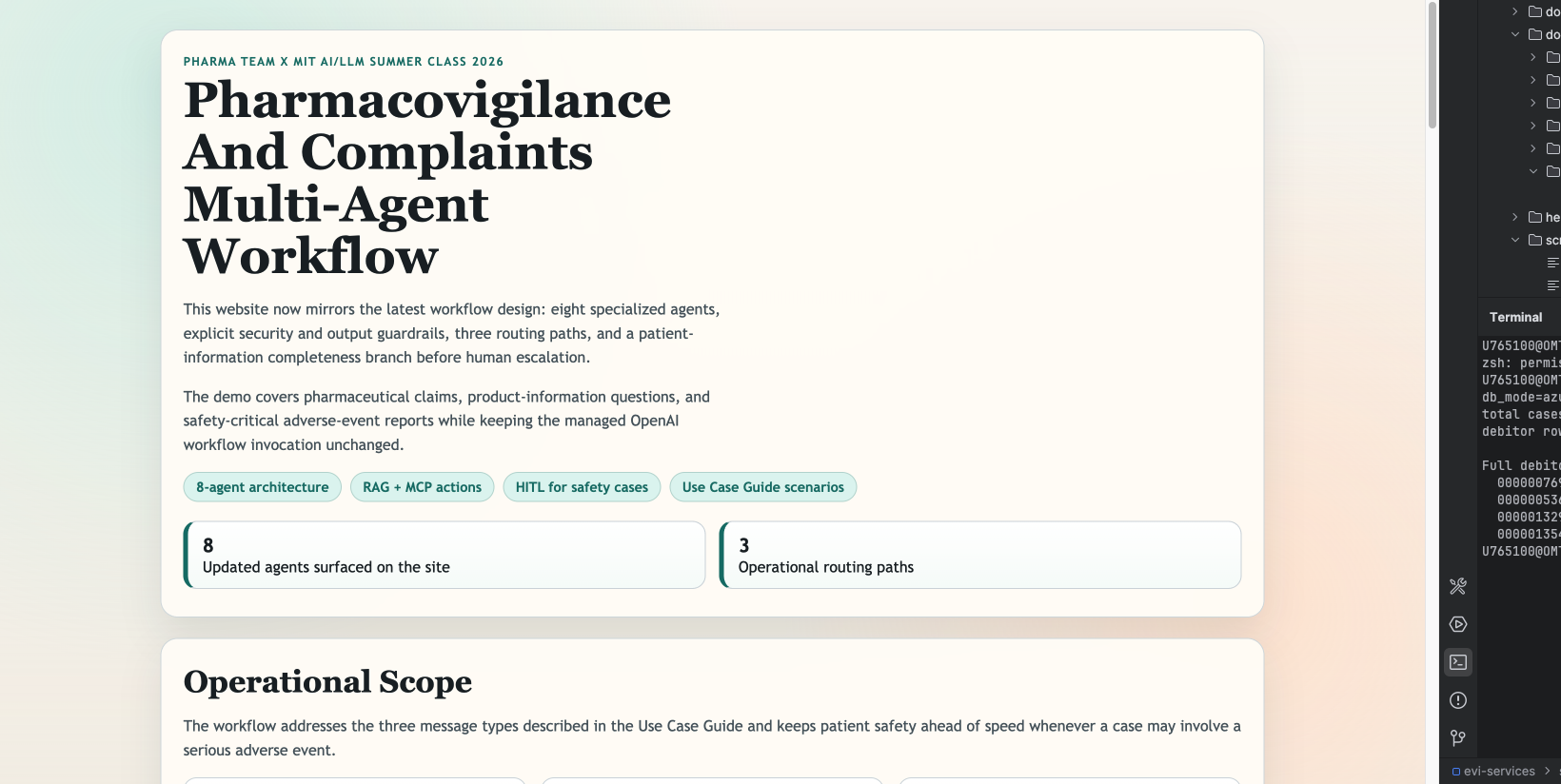
An eight-agent workflow for pharmaceutical complaints and adverse-event intake, built in OpenAI's Agent Builder and served through a managed workflow invocation. Three routing paths separate product-information questions, commercial claims and safety-critical reports; a completeness branch checks the patient information a case needs before anything escalates to a human.

Guardrails are explicit on both ends: input filtering on what enters the workflow, output constraints on what any agent is allowed to assert. Retrieval and MCP tool actions supply the reference material. Any case that may involve a serious adverse event goes to a human regardless of how confident the model is; in pharmacovigilance patient safety outranks throughput, and the routing has to say so structurally.

OpenAI Agent Builder 8-agent architecture RAG + MCP actions HITL for safety cases ChatKit
Workflow overview
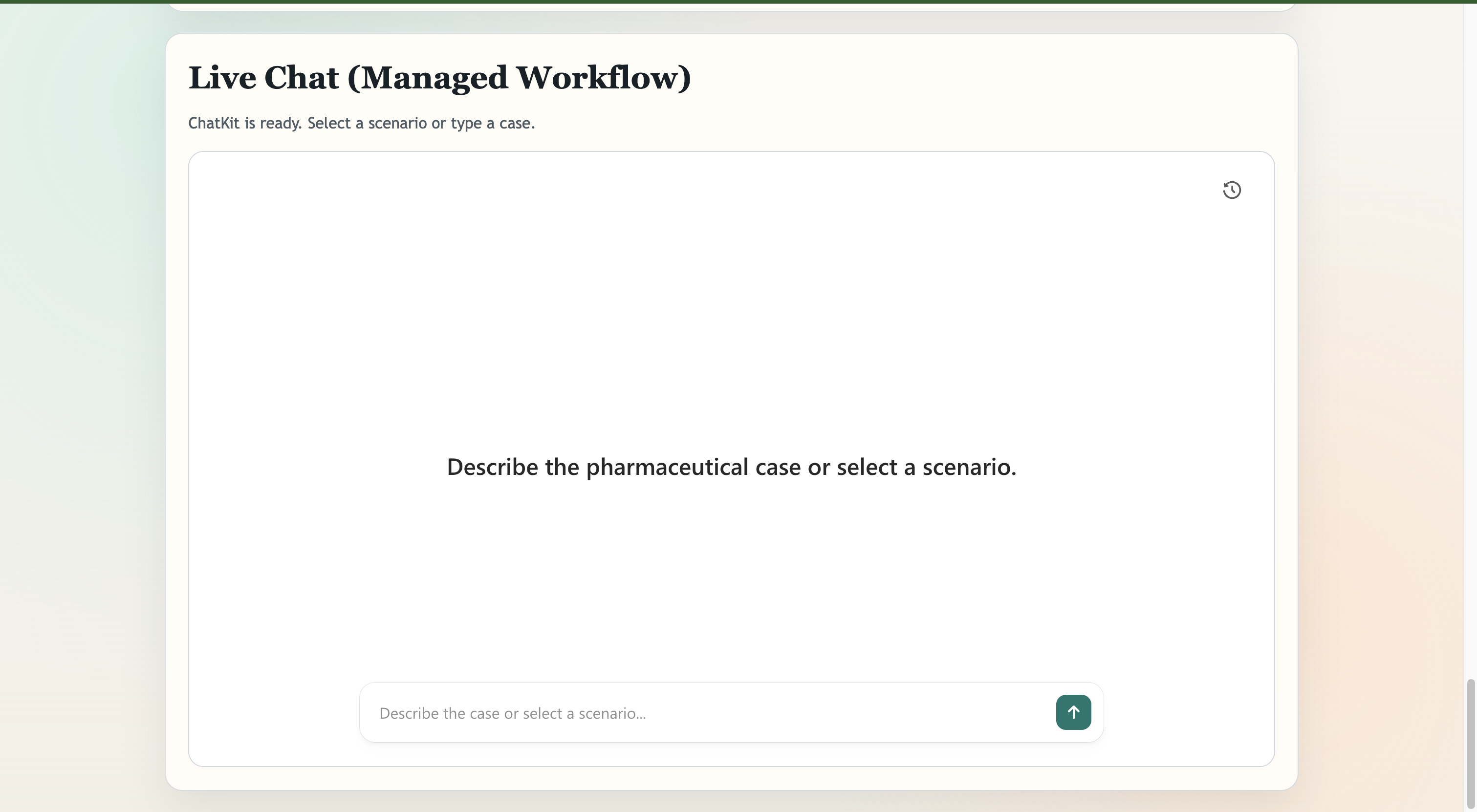
Workflow overview: agents, guardrails, routing paths and the escalation branch.
Live chat demo
The live demo surface: scenario-driven case entry against the managed workflow.
Regional medical supply distributor

Sales & procurement intelligence

Thirty supplier purchase orders spanning several years existed only as PDFs. I parsed them into a structured multi-sheet workbook; SKU normalisation, Pareto-style spend ranking, supplier-by-period comparison; and in doing so found a bonus-kit structure in the supplier's terms that produced substantial annual bonus inventory at effectively zero tax exposure. The finding was confirmed with the client's accountant.

The second half is a sales analytics layer over 275 clients: revenue analysis, dormant-account outreach targeting, and a custom SVG bubble map of accounts by geography and value. Excel is the delivery layer, deliberately; the people making the decisions were never going to open a dashboard.

What the data did wrong

  • Cost and profit columns unreliable at source; recomputed rather than trusted.
  • Duplicate client codes for the same real client.
  • Pass-through codes that silently corrupt naive aggregation.
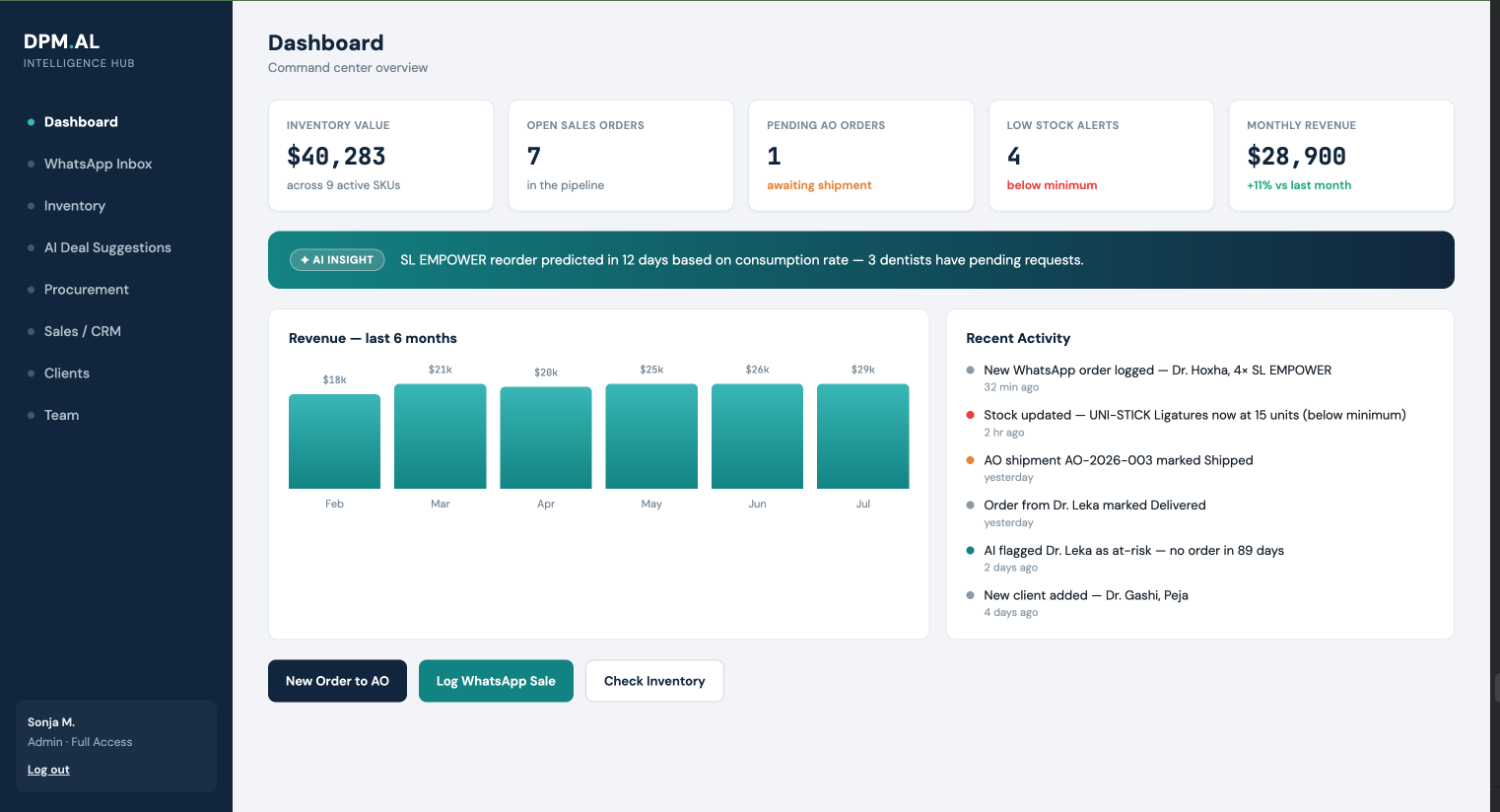
Intelligence hub dashboard
Command centre view: inventory value, open orders, low-stock alerts and a predicted reorder window, with revenue by month.
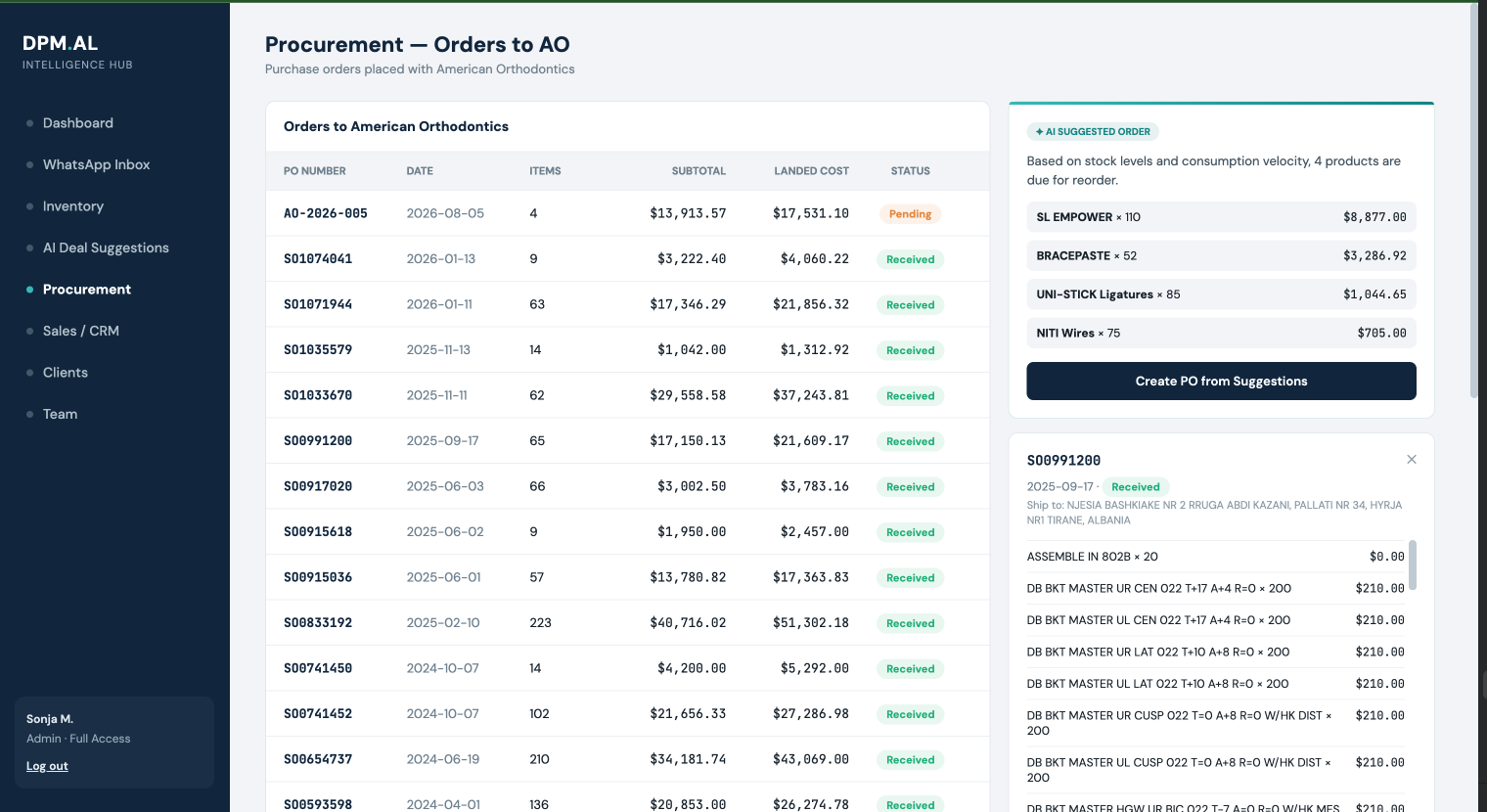
Procurement orders view
Procurement: parsed purchase orders with subtotal against landed cost, and a suggested reorder built from stock level and consumption velocity.
Method

AI adoption roadmap

Not a client project; the method I use to turn “we should use AI” into a sequenced plan with dated milestones and artifacts that either exist or do not. Gap analysis first, then a prioritised build order, then concrete outputs, then the outcomes those outputs are meant to unlock. It came out of running the process on my own transition and generalises directly to scoping an adoption programme for a team.

01
Gap analysis
Current capability against the capability the goal requires.
02
Sequence
Order the gaps by what unblocks the most downstream work.
03
Artifacts
Each phase ends in something that exists and can be shown.
04
Outcomes
Targeted, measurable, with a defined time horizon.
03  Enablement
Intergovernmental nonprofit · Western Balkans

AI enablement programme

Training workshops, a deployed conversational agent in Copilot Studio, and Power Automate deliverables; built inside the organisation's non-negotiable Microsoft-only environment rather than a stack of my choosing, across multiple languages and institutional stakeholders. Delivered under grant funding.

Copilot Studio Power Automate M365
National professional association · accounting

AI curriculum design

Course design and content development for a professional education programme on AI in accounting. Tooling and statistics verified against current sources for every session rather than written from memory; in a field where the capability changes faster than the syllabus, that is the whole discipline.

04  Web delivery

Beyond AI systems, I design and ship full websites for clients; brand system through deployment, including the DNS and infrastructure work that nobody puts in a portfolio.

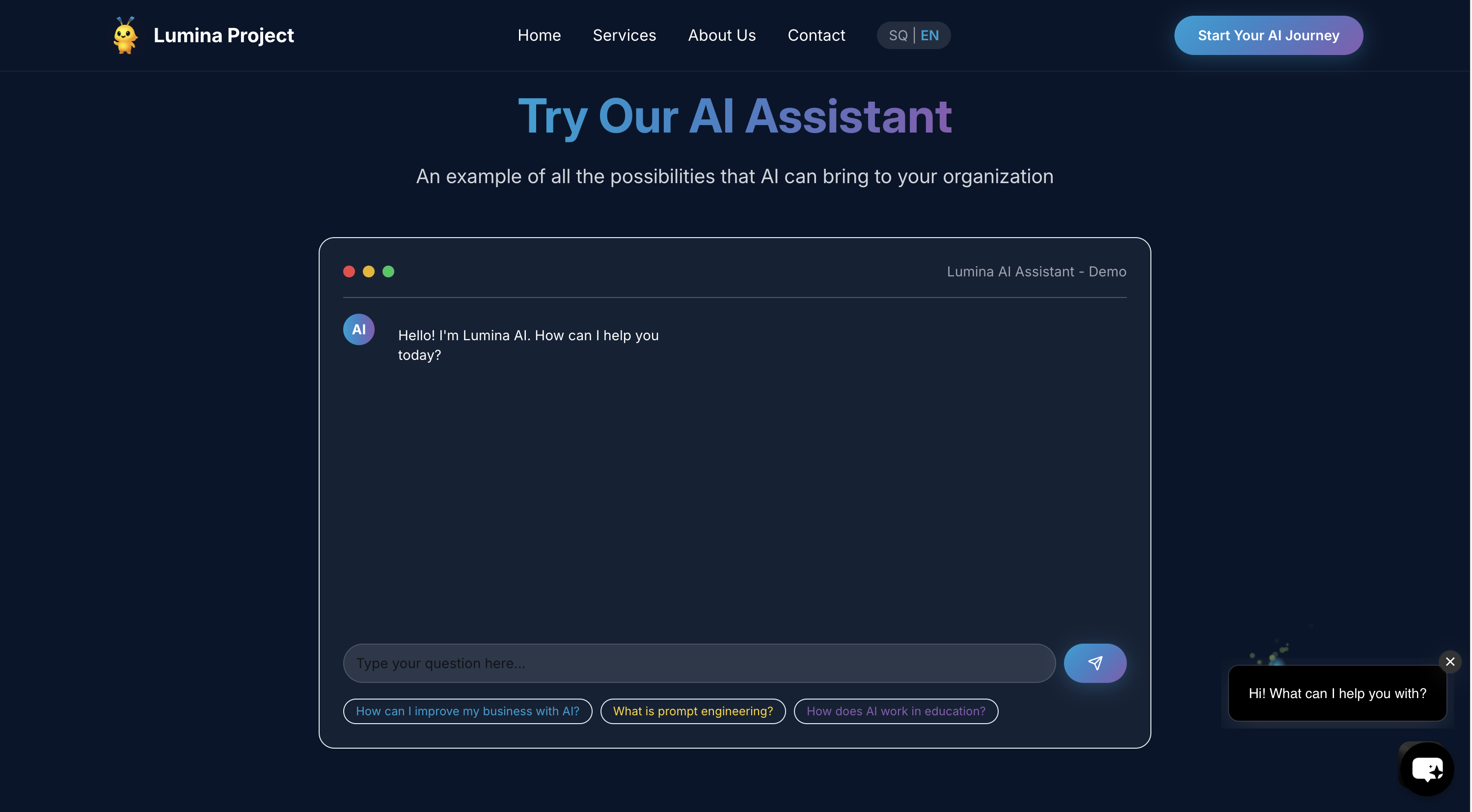
Lumina site screenshot

Lumina

luminaproject.info

My own venture. Full brand system and bilingual site, Albanian and English.

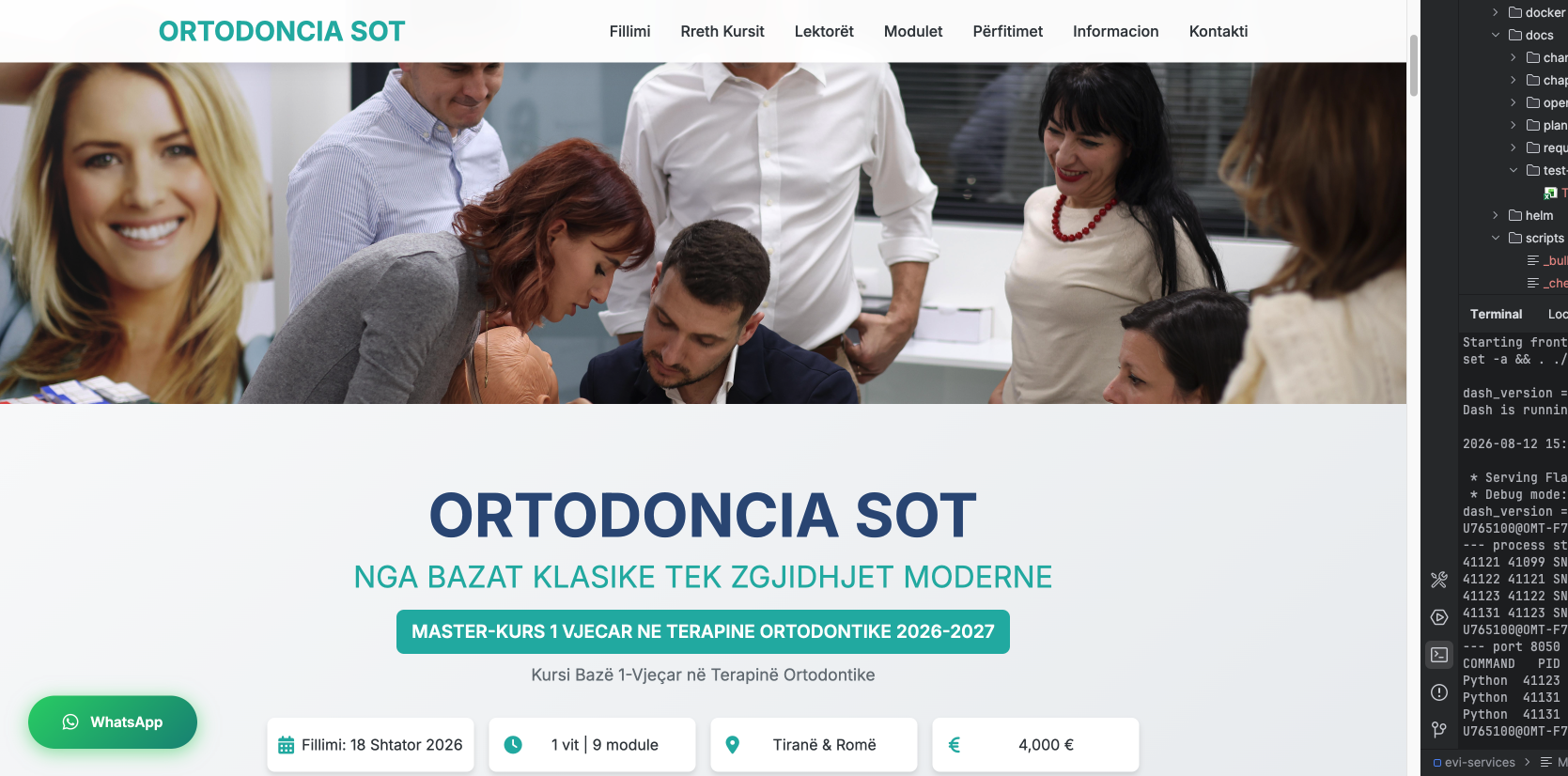
Ortodoncia SOT site screenshot

Ortodoncia SOT

Orthodontic practice

Client site. Scope and stack line to be filled in.

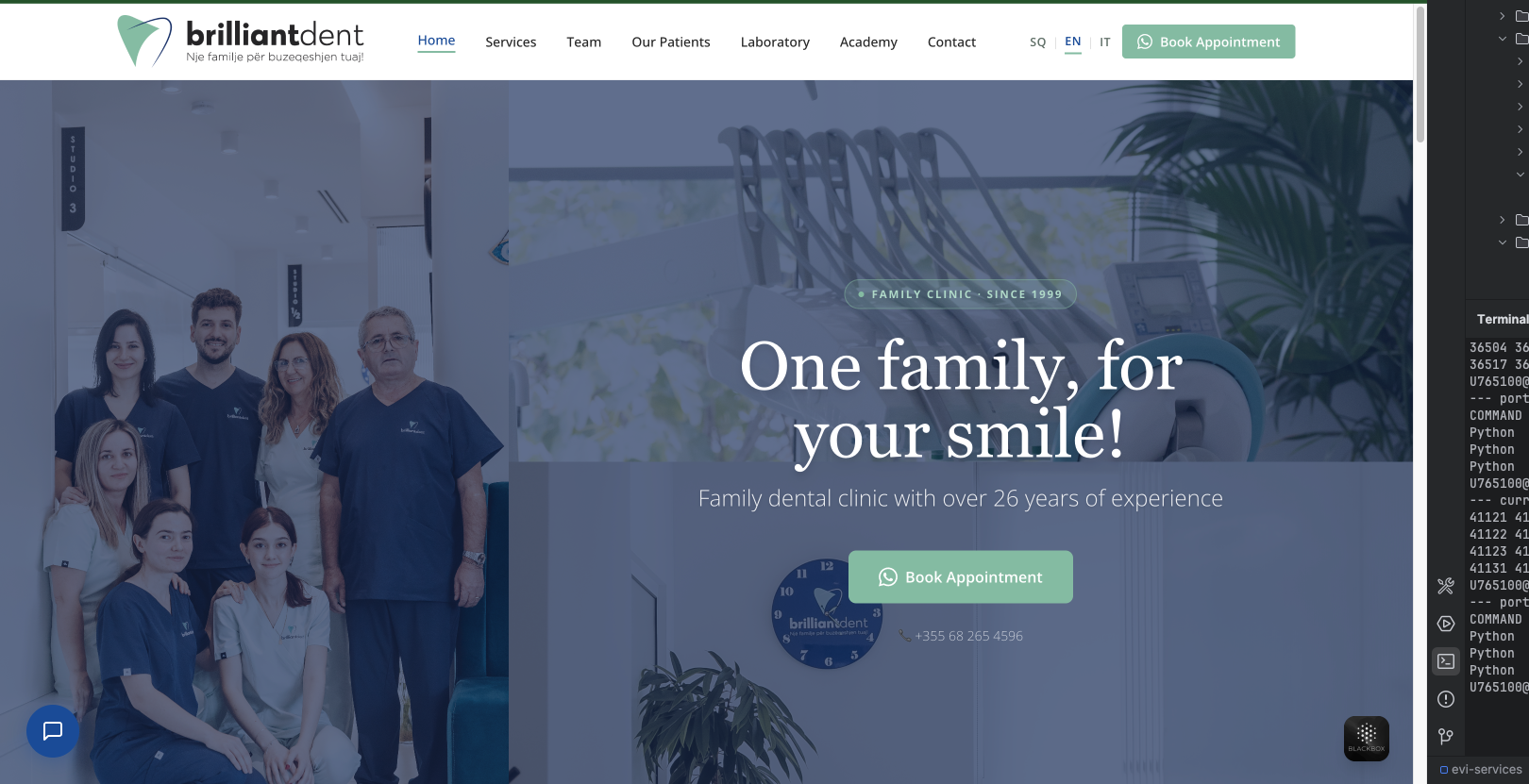
Brilliant Dent site screenshot

Brilliant Dent

brilliantdent.al

Dental practice site. Build and domain infrastructure; launch status to be confirmed.

05  Background

Lumina

Founder · AI consulting & development

My own venture. AI consulting and development; scoping, architecture and delivery of AI systems for clients, alongside the enablement and training work that makes them stick.

Lufthansa Industry Solutions

Software engineer

Aviation maintenance, repair and overhaul systems in Java, Spring Boot and Quarkus. SAP OData integration, Kafka, OpenShift, Azure SQL, Flyway. Business-plan management microservices, jobcard compilation and execution, RFQ calculation.

By The People Technologies

AI product manager · NYC

RAG systems and MCP servers for enterprise clients across private equity, venture and pharmaceutical sectors. Led a retrieval-accuracy improvement programme on a production knowledge system.

MIT AI systems architecture programme

Course assistant

Designed the measures-of-performance and measures-of-effectiveness framework used to assess student work, and taught multi-agent architecture across two tool tracks.